Evangelical Christ Church, Oberschöneweide
Expert Reports and Renovation
Berlin-Oberschöneweide
2019
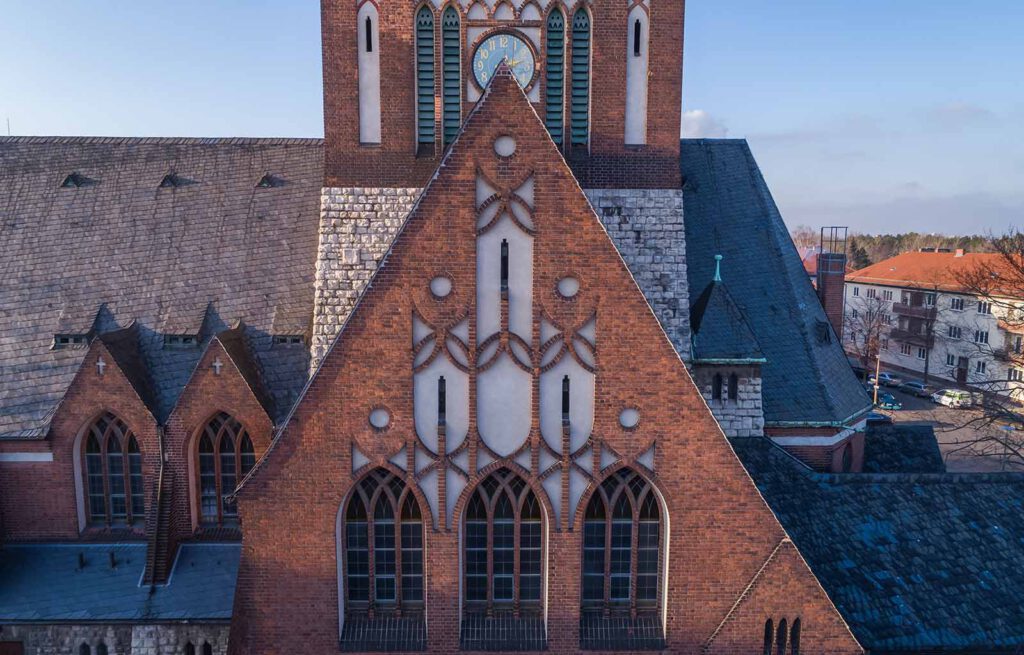
Church construction
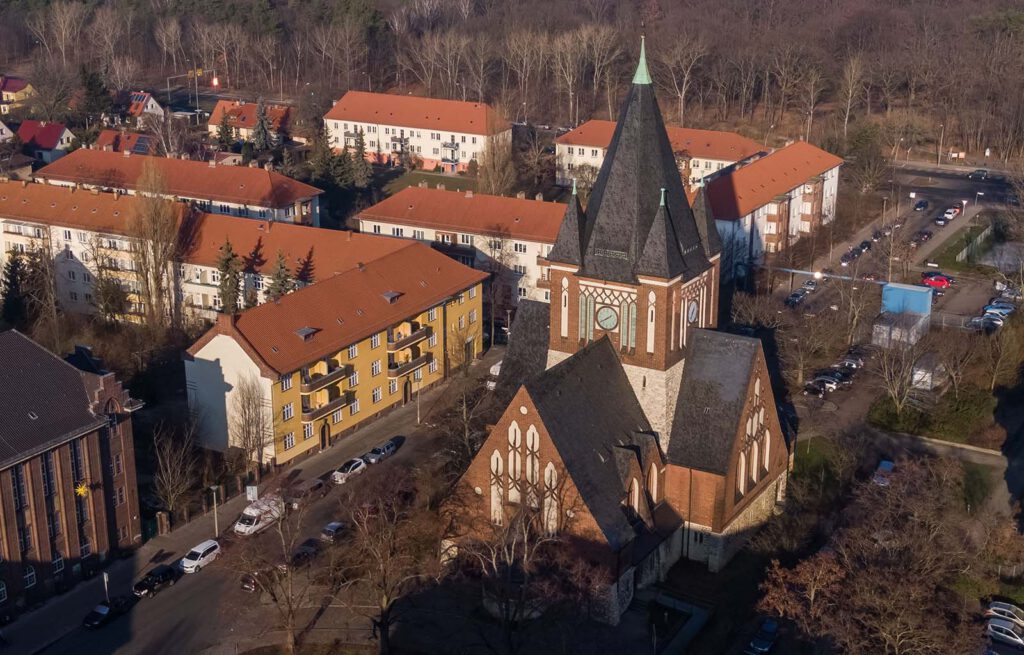
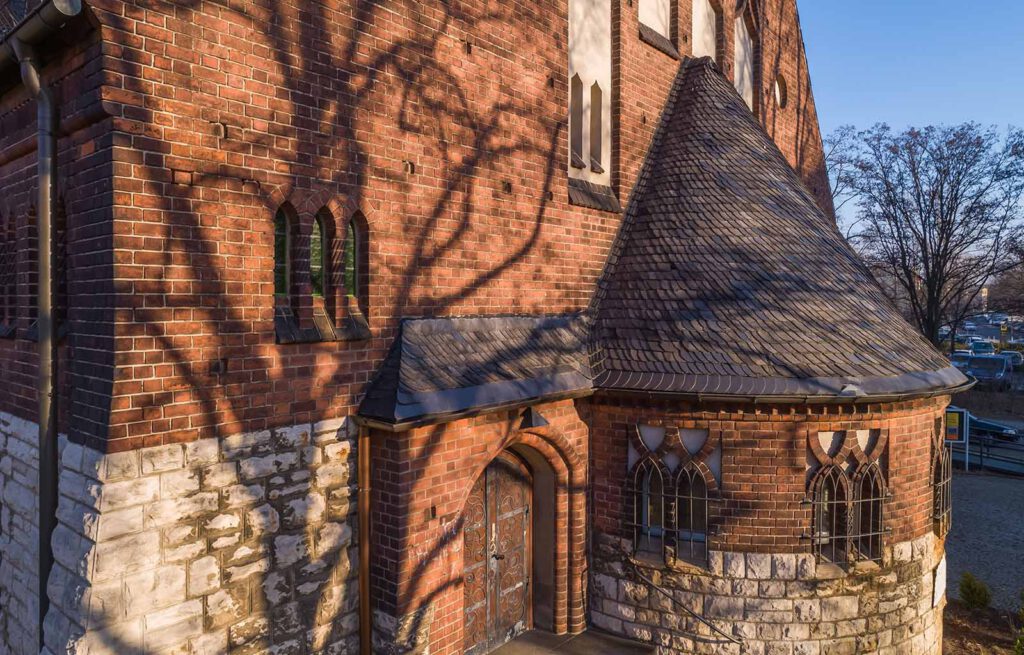
Christuskirche is a Protestant church in the Oberschöneweide district of Berlin, built by Robert Leipnitz in 1907–1908. The church is a designated historic landmark.
After World War II, various war damages were repaired, so that starting in 1959, the church served not only as a place of worship but also as a recording studio due to its excellent acoustics. Several interior renovations were even carried out to accommodate recordings with theBerlin Symphony Orchestra. Due to a lack of funds for renovation work, the church was abandoned in 1988. The church building was subsequently made available exclusively to the recording studio of VEB Deutsche Schallplatten and its successors until 2001.
It was not until 2003/2004 that the Christuskirche could be comprehensively renovated. In the process, several alterations were made: Below the side galleries, a separate café and a community room were created, which is also used for exhibitions.
Expert opinion and renovation of slate roof and tower
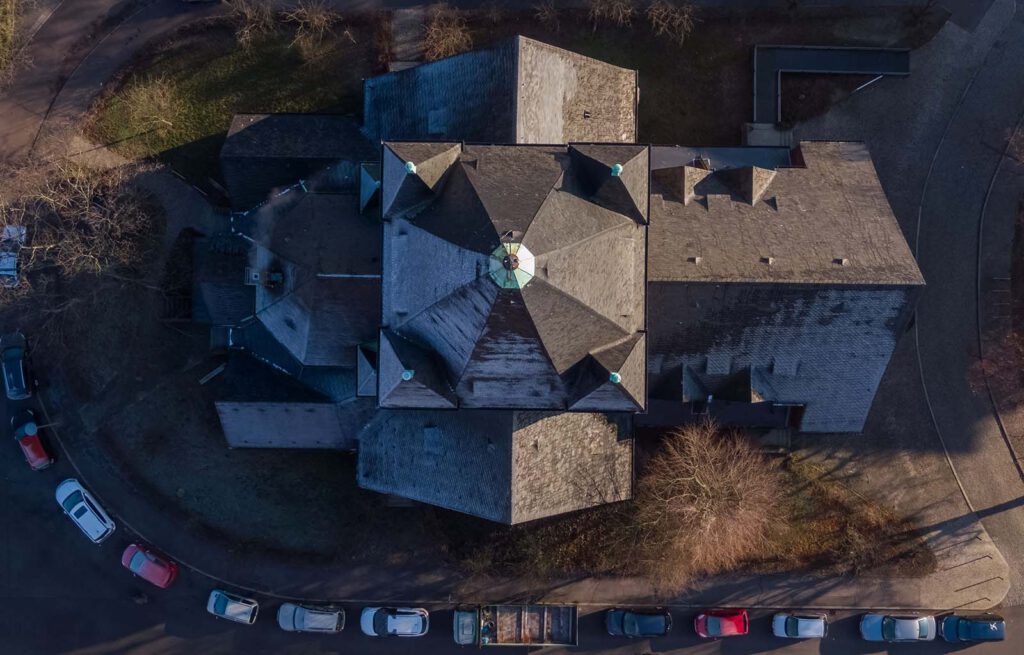
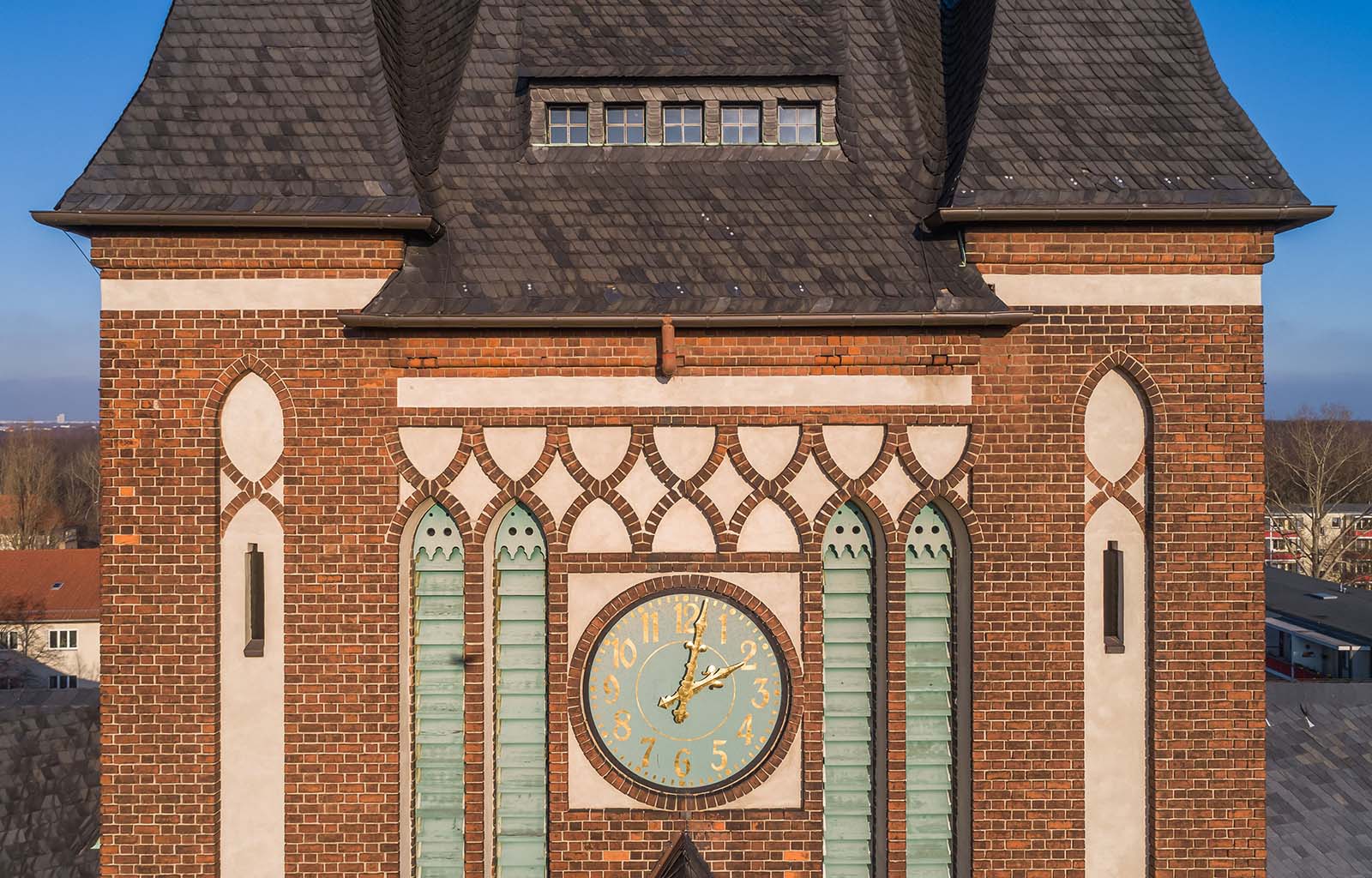
The neo-Gothic church building was designed with a cruciform nave surmounted by a massive crossing tower with an eight-sided dome. The roof surfaces are correspondingly small and were covered with slates in "German covering".
In 2019, we conducted a damage assessment of the slate roof. For the assessment, a 3D survey of the attic and the tower was conducted. The goal of the project was to produce true-to-scale floor plans and sections at a scale of 1:50. Since the roof truss was complex and exhibited age-related deformations, a detailed survey and representation were essential for the renovation. Based on various expert reports (including a wood assessment), damage was cataloged, photographic documentation was created using a drone, and necessary renovation measures were identified. An assessment was also conducted to determine whether a complete renovation of the roof could be avoided through individual repair measures.
This was followed by selective rehabilitation of the identified damage.