
Father Rupert Mayer House
Renovation, conversion, and expansion of the community center
Mons, Belgium
2018–2026
LP 1–9
Project
The Pater-Rupert-Mayer-Haus was built as an extension to a historic building in the immediate vicinity of Mons following the relocation of NATO's Supreme Headquarters Allied Powers Europe (SHAPE) to Belgium. It serves the German-speaking community in the SHAPE area, in particular soldiers and their families. The German Catholic Military Chaplaincy organizes church services, pastoral care for military personnel, and programs for family members back home.
In 2016, it was decided to adapt the parish location to the current and future requirements of military pastoral care as part of a comprehensive renovation and expansion.
Location and context
The Mons site is home to SHAPE, NATO's headquarters in Europe. The Pater-Rupert-Mayer-Haus is located directly adjacent to the secure area, which is only accessible with passport control and prior registration. This gives the building a special role as a low-threshold, freely accessible meeting place. It functions as an open house for the German-speaking community in the international military environment.
Handling the inventory
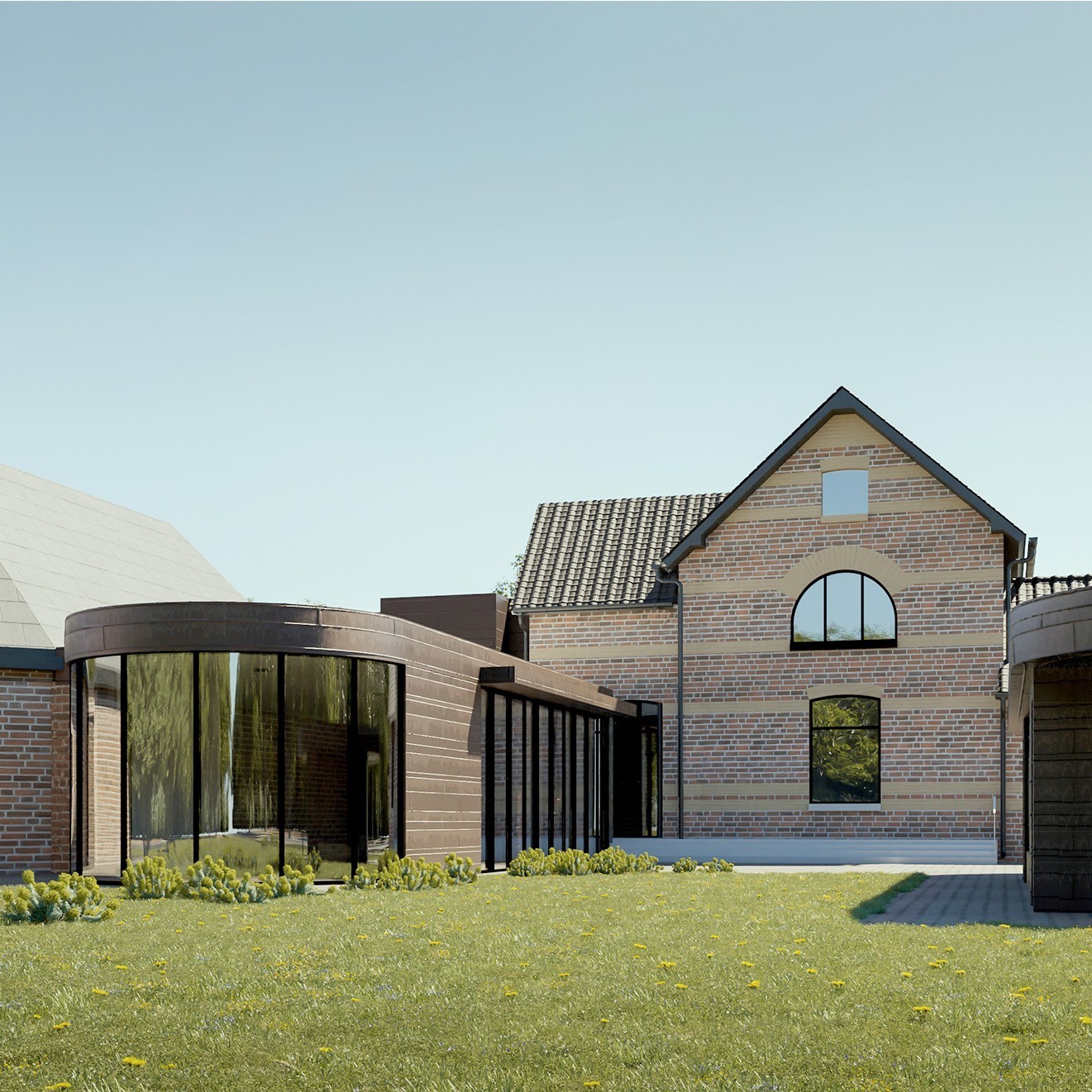
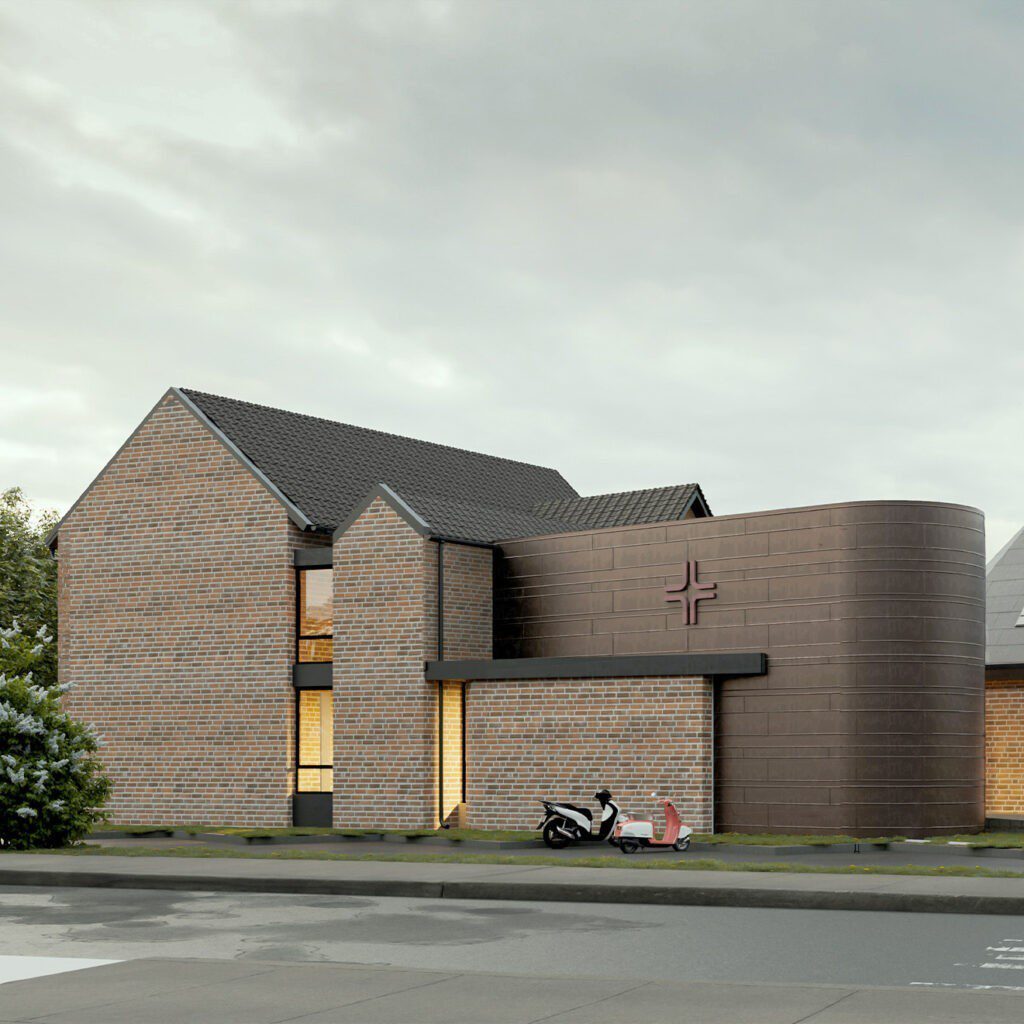
As a result of intensive consultations with the local authorities, the historic building was largely preserved. The building, which dates from the 1960s, was partially demolished and sensitively integrated into a new overall concept. The existing community hall, which was in good structural condition, was retained and functionally linked to the chapel and the new building.
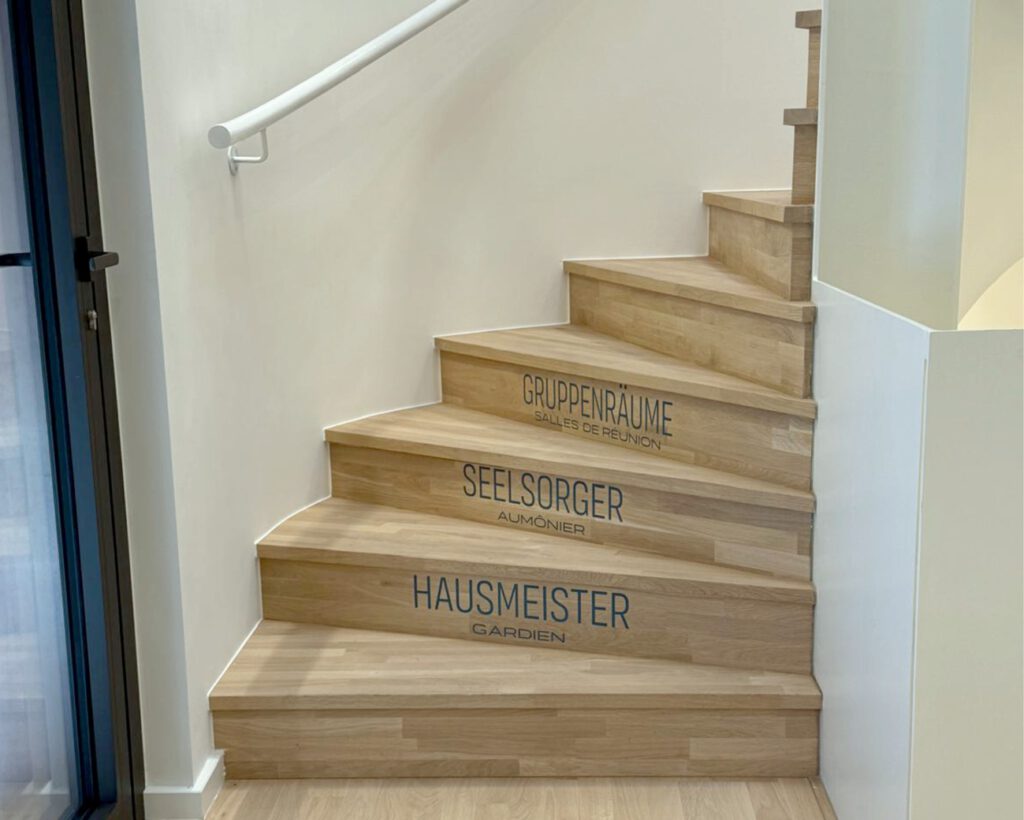
By relocating the original central staircase, it became possible to position the extension in an ideal location in terms of urban planning and functionality, clearly connecting the old and new buildings.
Architectural concept
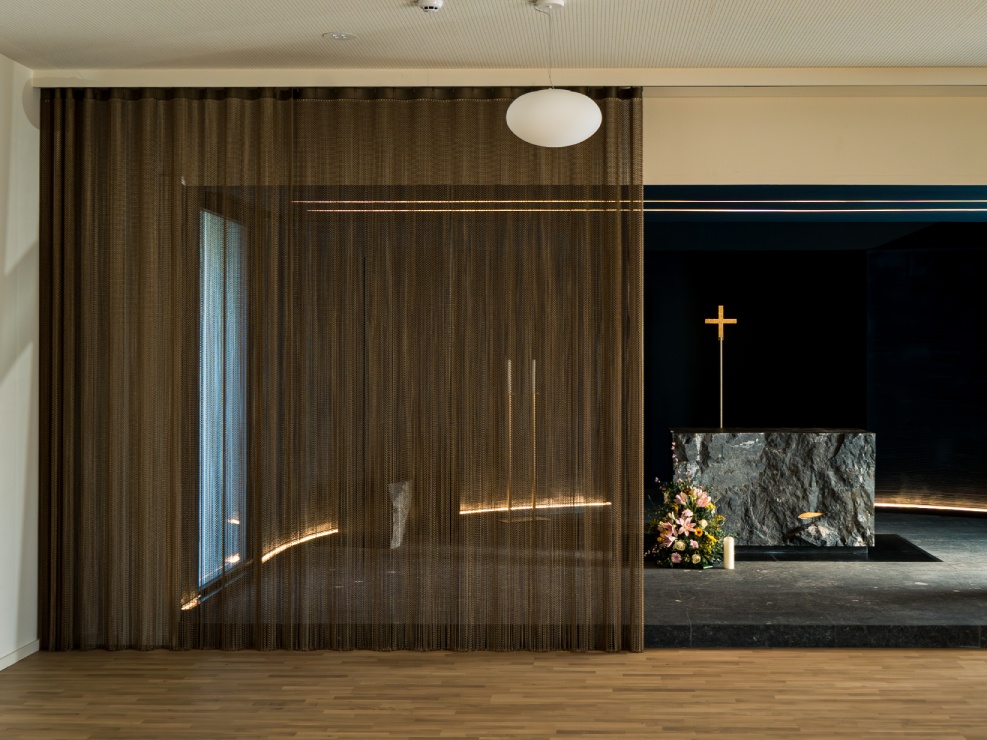
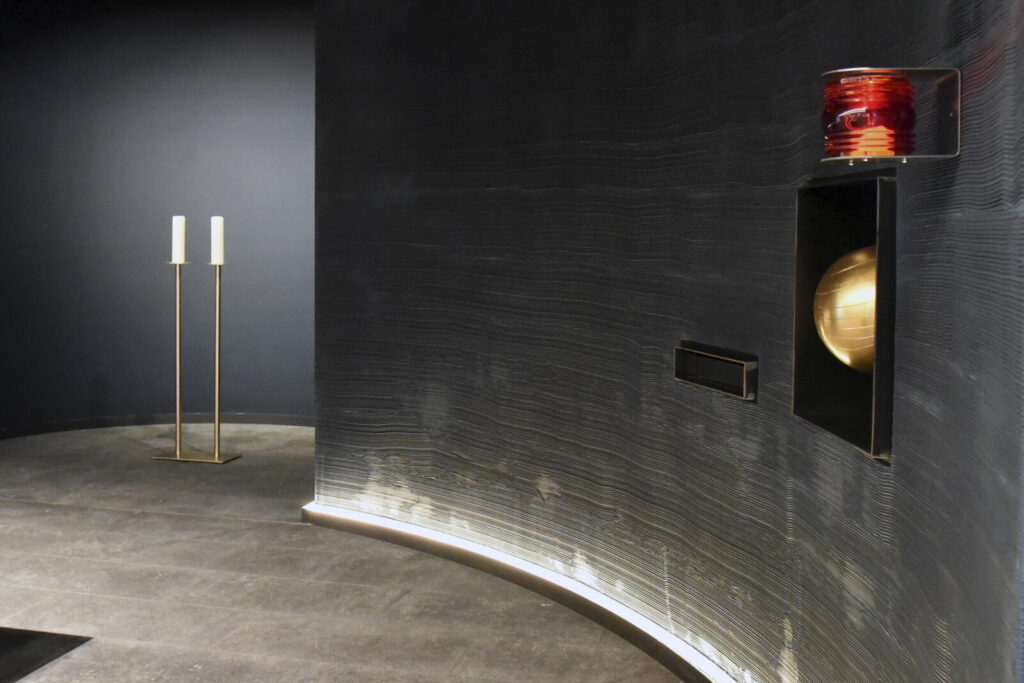
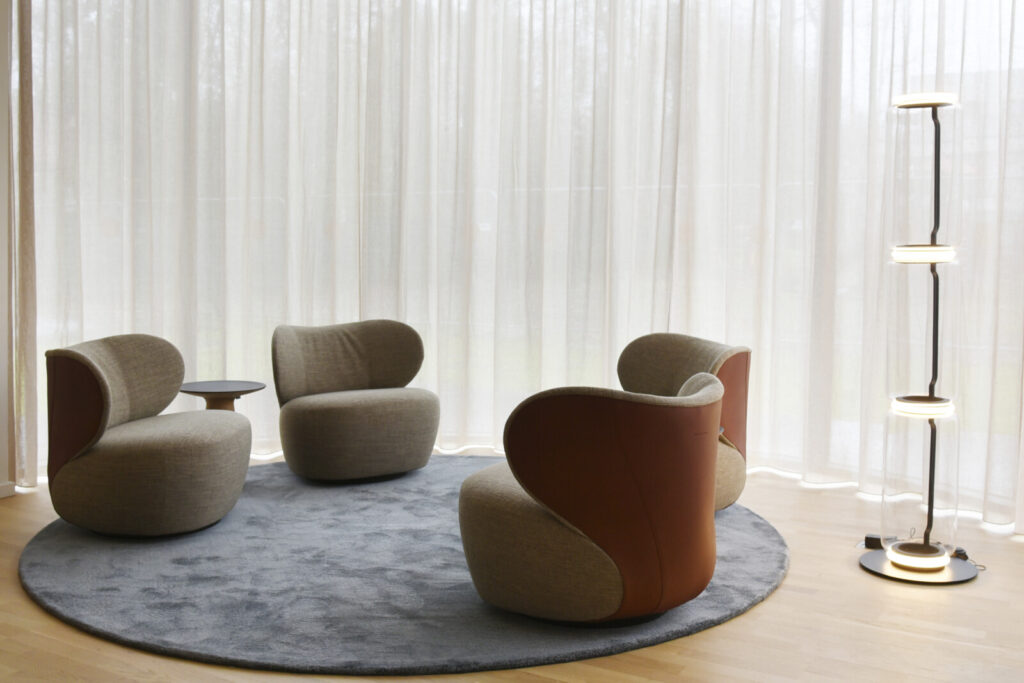
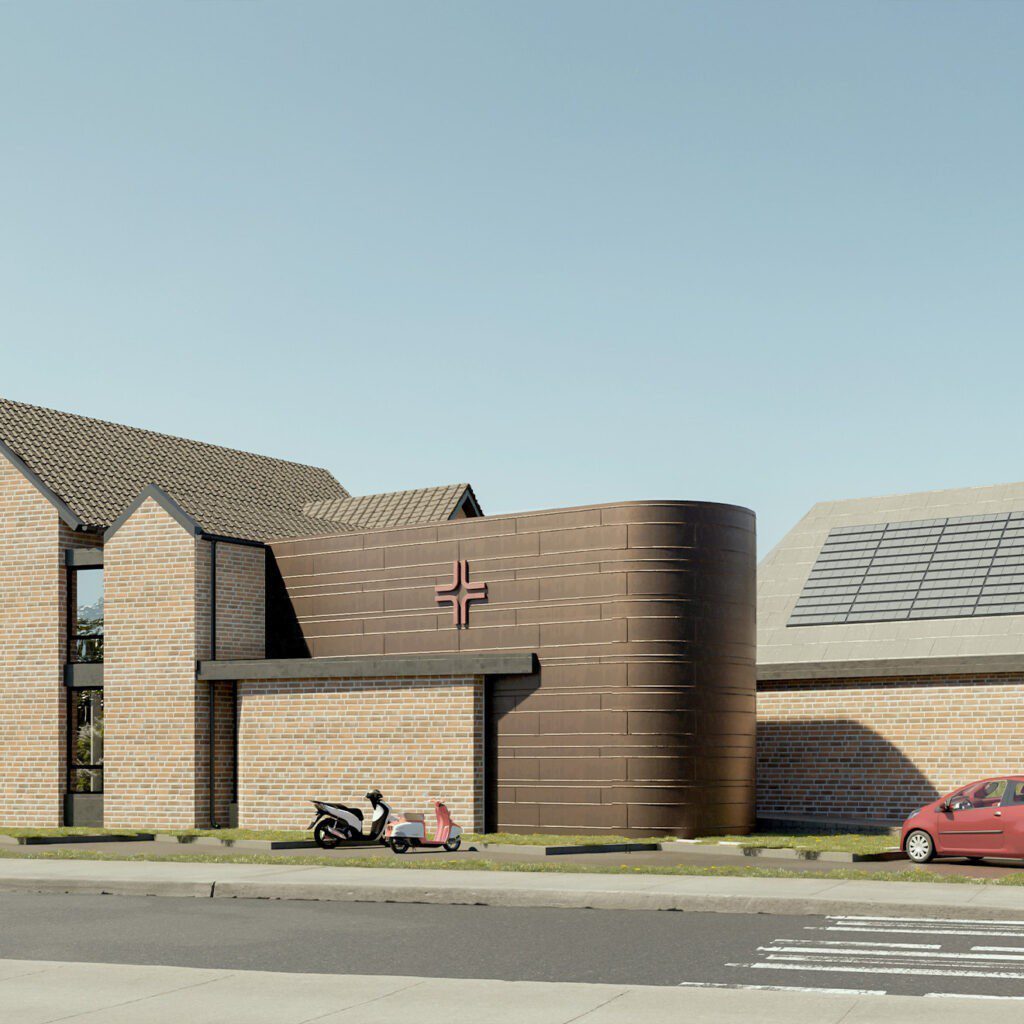
The new structures add a contemporary touch with rounded copper facades and semicircular building ends. The motif of rounding is taken up in the interior and particularly characterizes the design of the new chapel.
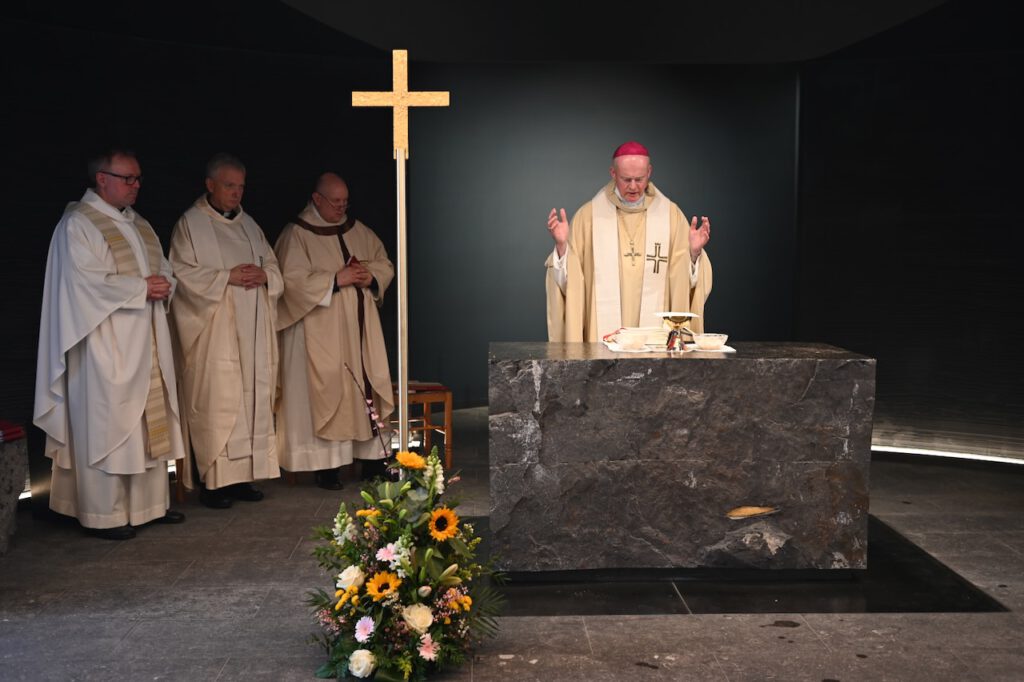
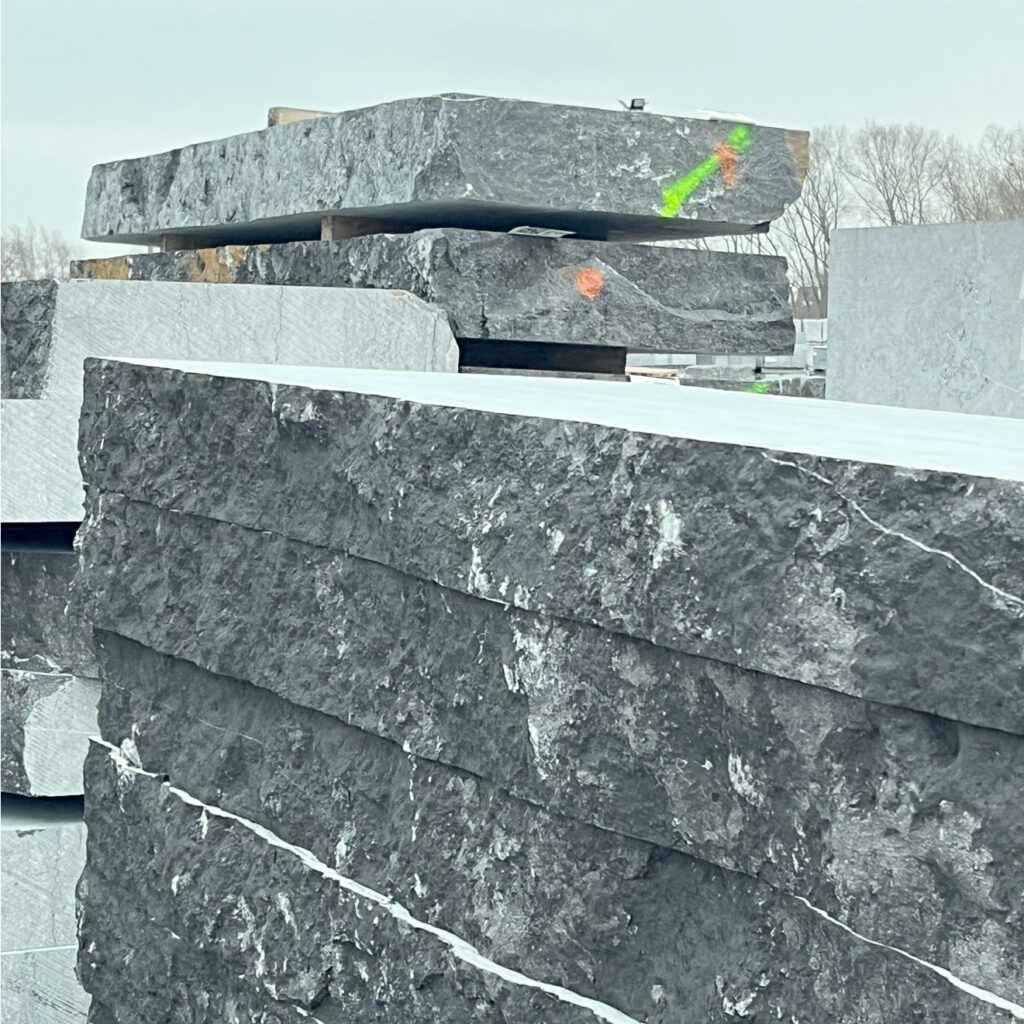
Local natural stone, "Pierre bleue," from the nearby quarry in Soignies was used for the altar and ambo. This creates a close material connection to the region. A differentiated color concept takes up both sacred and military traditions and translates them into a contemporary architectural language.
Spatial concept and use
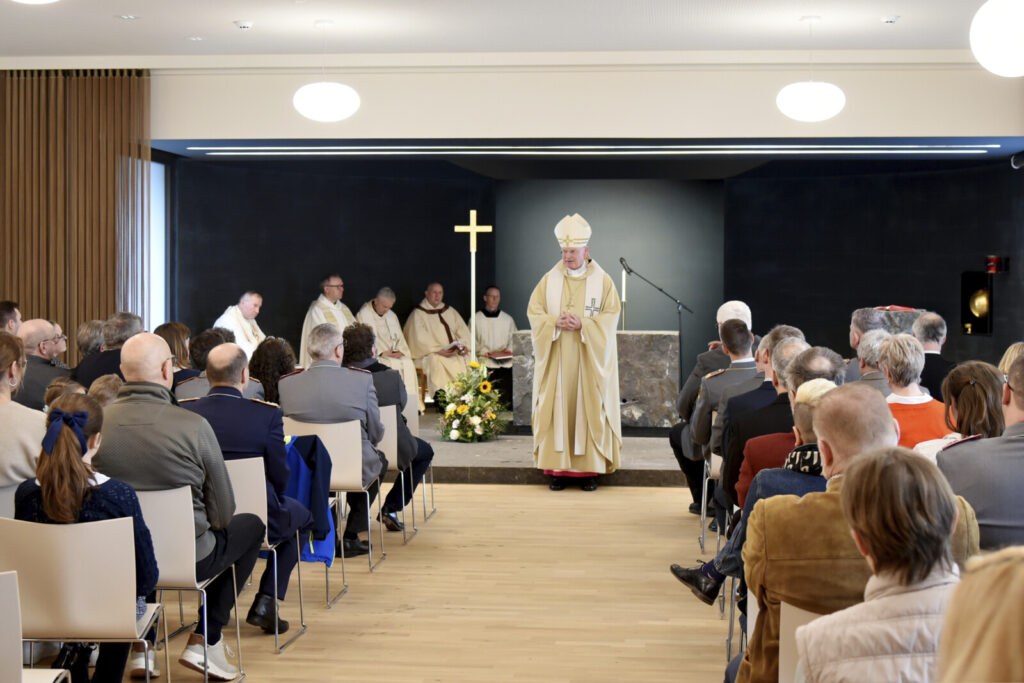
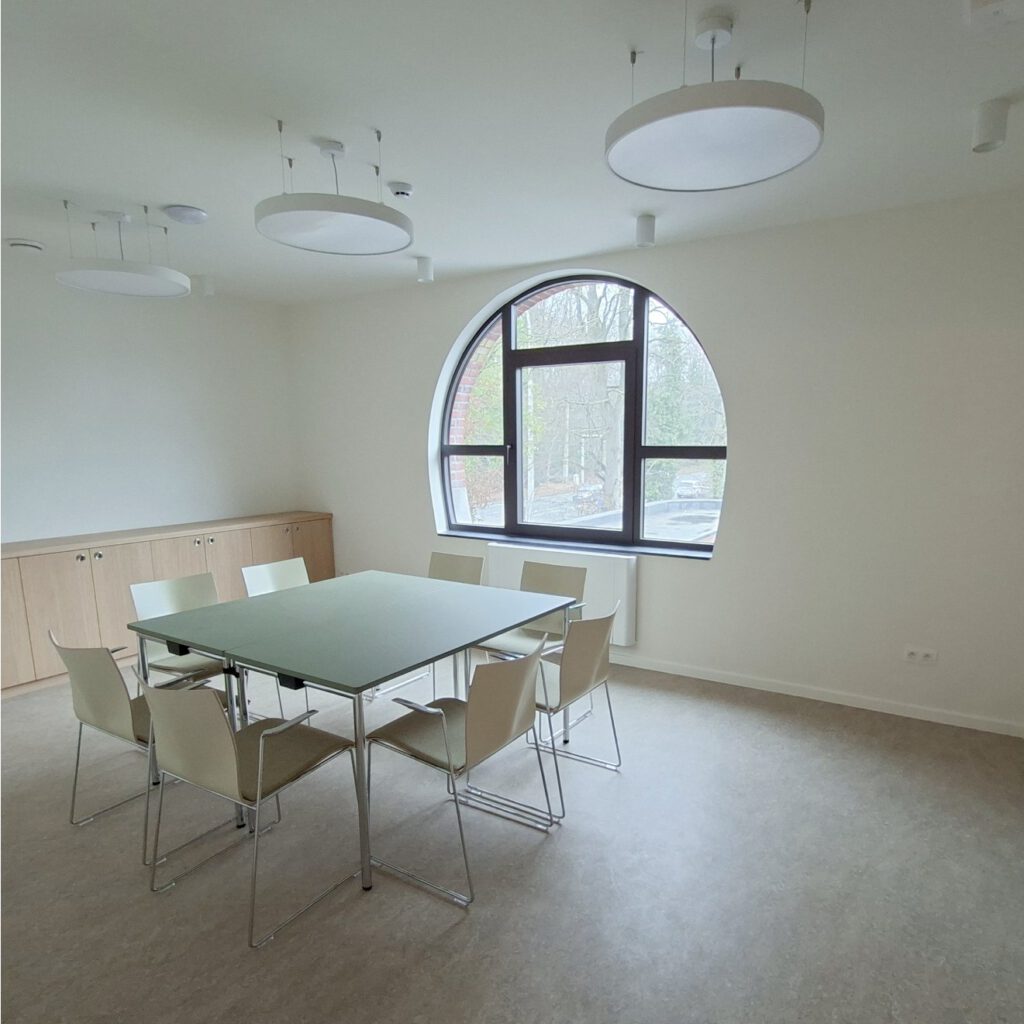
The interior spaces are designed as a sequence of flowing areas that merge into one another. This spatial continuity allows for a variety of uses and flexible furnishing. In addition to church services, events with up to 400 people can be held here, as well as celebrations and larger gatherings.
Modern media technology makes it possible to maintain contact with home and other stations worldwide, thus strengthening the sense of community across geographical distances. The design is deliberately child-friendly and barrier-free, so that all generations and different needs are taken into account. An open, hospitable atmosphere characterizes the entire ensemble.
Sustainability and technology
The building complex has also been designed to be energy efficient for the future. A heating system with an air heat pump and a solar roof contribute to a sustainable and resource-saving supply. The Pater-Rupert-Mayer-Haus thus combines respectful treatment of the historic building stock, a contemporary architectural addition, and high functional requirements into a holistic concept.
The project in the media
Catholic Military Chaplaincy: Inauguration of the Father Rupert Mayer House near Mons, March 2, 2026