
Reorganization of the St. Nikolai memorial
Competition
Hamburg
2025
Project idea
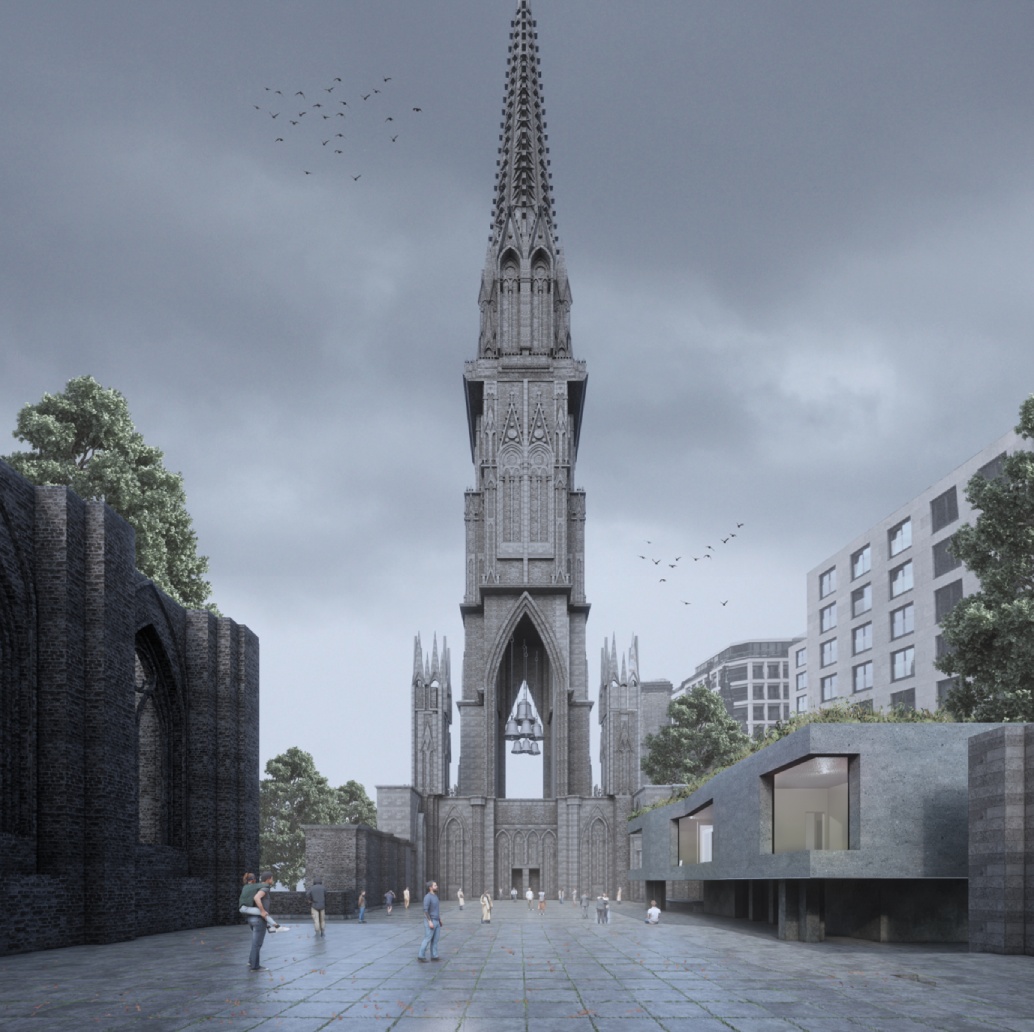
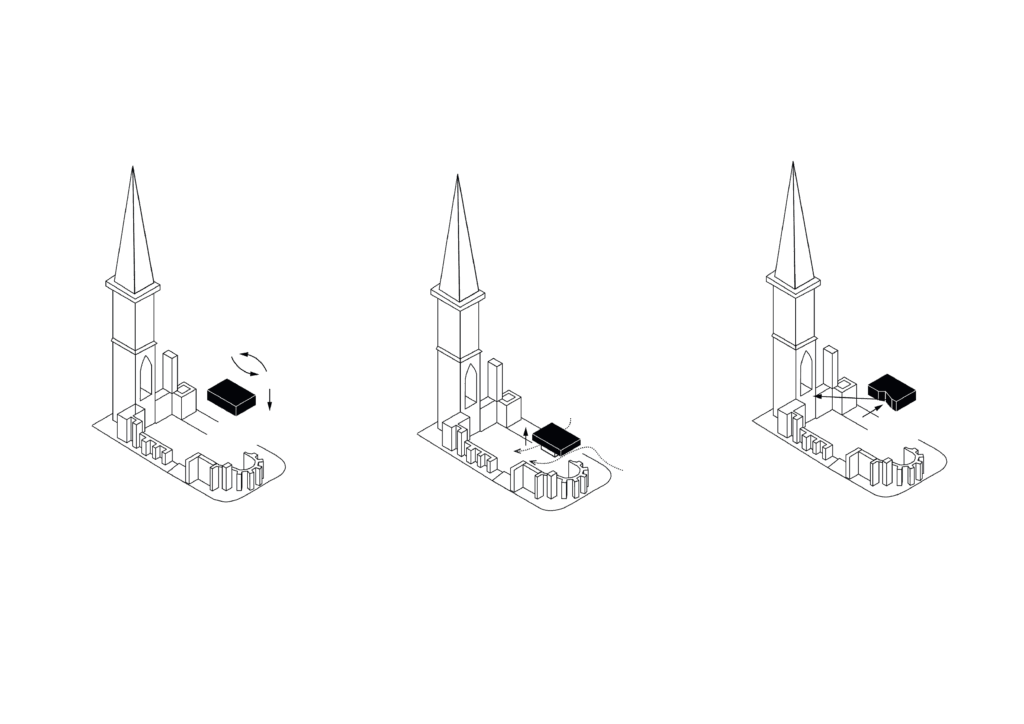
As part of the competition, we developed a design for the reorganization of the St. Nikolai memorial, which strengthens the significance of the site as a place of remembrance against war and destruction. The aim was to deliberately keep the former nave plateau free and create a rare place of peace and reflection in Hamburg. A new pavilion complements the memorial and reinforces the address, while the historical development remains intact.
Design and architecture
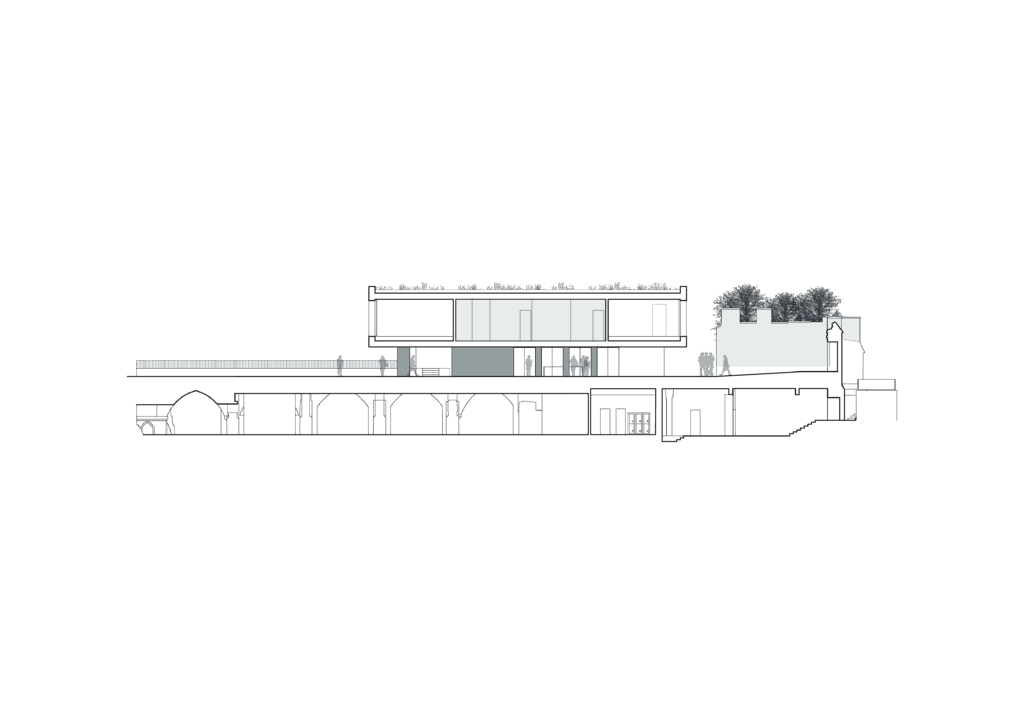
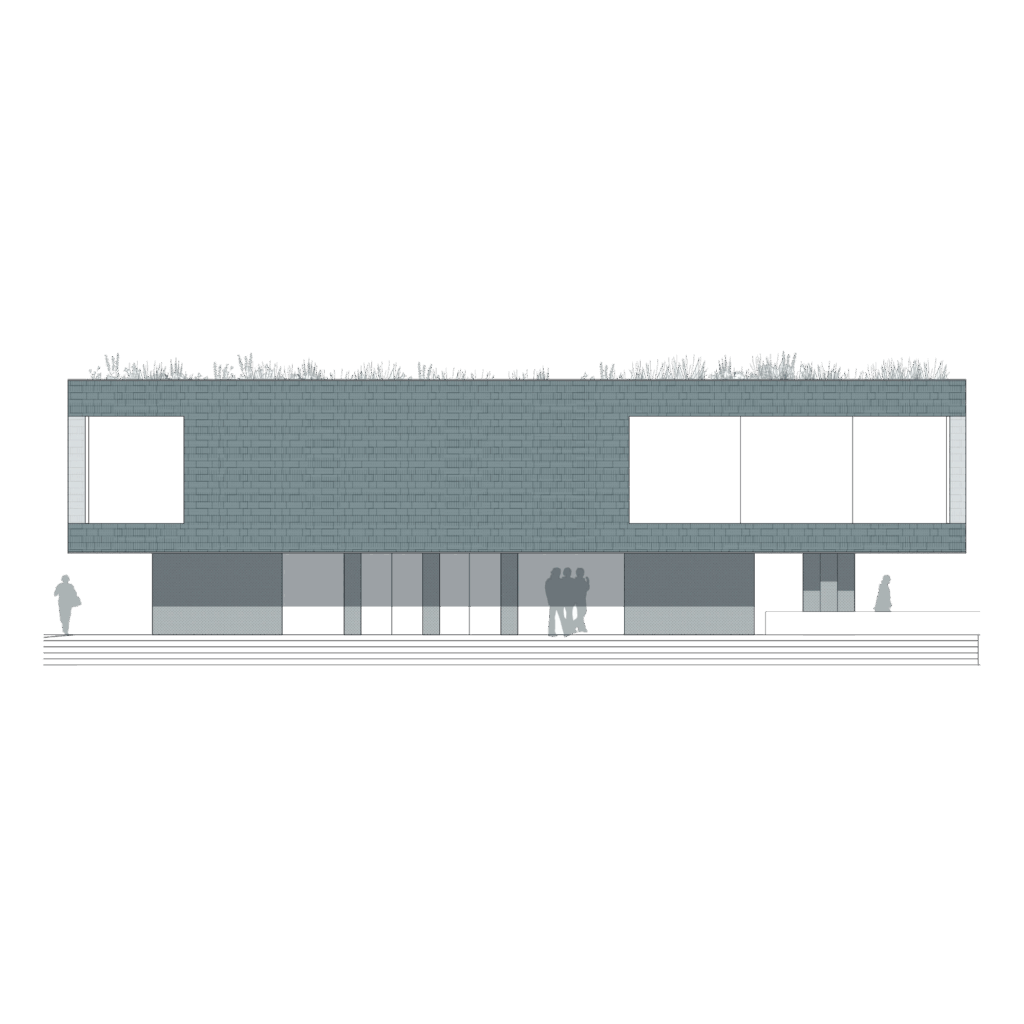
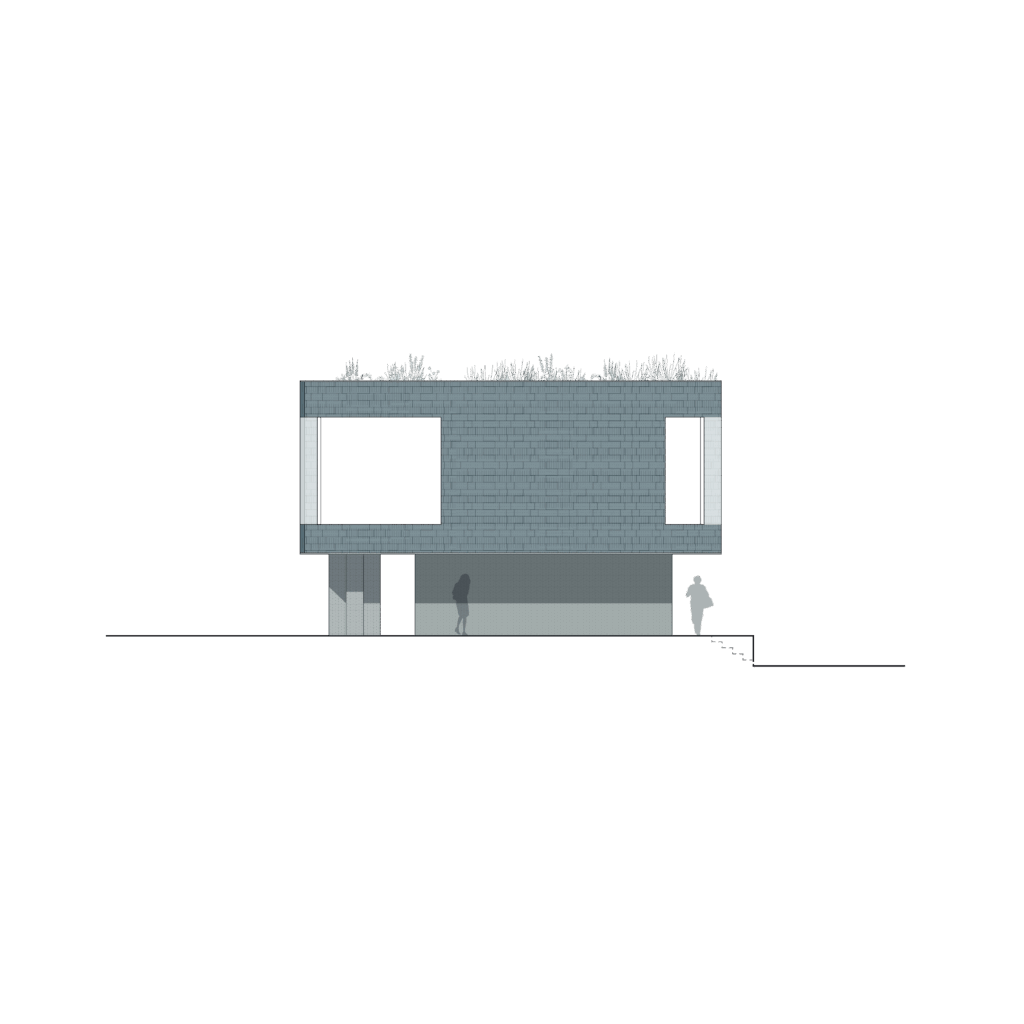
The pavilion is characterized by clear structures and simple forms that contrast with the existing neo-Gothic building, but do not displace it. The permeable first floor marks the entrance, while the floating upper floor opens up new perspectives on the monument. Dark natural stone, large windows and visible materials such as wood and linoleum combine transparency, sustainability and tactile quality. The interior and exterior areas sensitively reflect the history of the site, for example through the light reflections on the ceiling, which are reminiscent of the bombing rains during the Second World War.
Use and functionality
The new building houses seminar and recreation rooms, a foyer with a ticket office and museum store as well as flexible event spaces. The barrier-free access and functional room organization enable efficient use with minimal intervention in the historical substance. The cellar will be retained for exhibitions and events, harmoniously combining historical and new functions.
Open space and ecological design
The green spaces and extensive green roofs connect the new building and the ruined landscape. Pioneer plants such as goldenrod and mullein are integrated into a near-natural design that promotes ecological diversity and creates a quality of stay. The pavilion gives the impression that nature is slowly reclaiming the new building, while the memorial remains a powerful place of remembrance.
Sustainability and operation
The design focuses on durable and recyclable materials, low maintenance and energy-efficient operation. The extensive green roof requires minimal maintenance, while the natural stone façade offers a long life cycle. The functional arrangement of the rooms reduces the need for staff and enables flexible, user-friendly operation.
Conclusion
Our competition entry shows how a sensitive new building respectfully complements the historical substance, makes the work of remembrance visible and at the same time creates new possibilities for use. By combining architecture, functionality and ecology, the St. Nikolai memorial can be experienced and strengthened in the long term.
Cooperation
In collaboration with:
100Landschaftsarchitektur
Thilo Folkerts
Käthe Niederkirchner Straße 7
10407 Berlin
t/f.: +49.30.4679 4671